


When you or a loved one is injured, life can feel overwhelming. In addition to managing the physical and emotional recovery, you may also need to navigate the legal process.
If you’re considering hiring a personal injury lawyer in Georgia, you likely have many questions.
What steps should you take? How do you know if you have a case? How can an attorney help?
In this post, we’ll walk you through the basics of personal injury law in Georgia and give you insight into what you should look for when hiring a lawyer.
What Is Personal Injury Law?
Key Georgia Personal Injury Laws
- Statute of Limitations: In Georgia, you generally have 2 years from the date of the injury to file a personal injury claim, as outlined in Ga. Code § 9-3-33. Missing this deadline may prevent you from seeking compensation.
- At-Fault System and Comparative Negligence: Georgia follows an at-fault system with modified comparative negligence. This means you can seek compensation if you are less than 50% at fault for the accident, but your compensation will be reduced by your percentage of fault (e.g., if you are 30% at fault, your recovery is reduced by 30%).
When Should You Hire a Personal Injury Lawyer?
If you’ve been involved in an accident, it’s not always clear whether you need a lawyer right away. However, a personal injury lawyer in Georgia can provide invaluable support from the start. Here are some signs that it might be time to seek legal advice:
- Serious injuries or long-term recovery: If your injuries are severe or you’re facing a long recovery, having a lawyer on your side can help ensure you get fair compensation for medical bills, lost wages, and pain and suffering.
- The insurance company is being difficult: Insurance companies often try to minimize payouts. If you’re facing challenges negotiating with the insurance adjuster, a lawyer can help you understand your rights and fight for a fair settlement.
- Liability is unclear: If it’s unclear who is at fault for your injury, a lawyer can investigate and gather evidence to build your case, especially given Georgia’s modified comparative negligence rules.
- You’re unsure about the legal process: If you don’t know where to start, how to file, or how to navigate the complexities of personal injury law, an experienced lawyer can guide you step-by-step.

How a Personal Injury Lawyer Can Help?
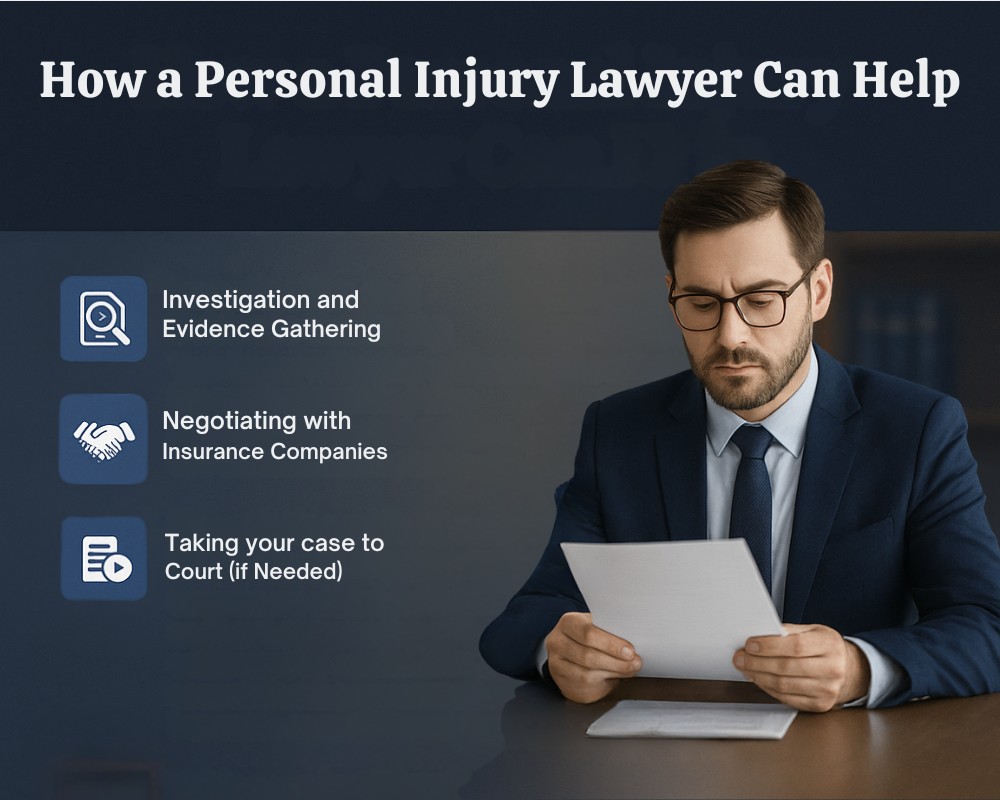
A personal injury lawyer does more than just represent you in court. Here are some of the key roles they play in your case:
- Investigation and evidence gathering: Your lawyer will gather evidence like medical records, police reports, witness statements, and accident scene photos to build a strong case.
- Negotiating with insurance companies: Lawyers are skilled negotiators and can help you secure a fair settlement by handling all communication with the insurance companies involved.
- Filing paperwork and meeting deadlines: Personal injury claims involve a lot of paperwork, and there are strict deadlines to follow. A lawyer can ensure everything is filed correctly and on time.
- Taking your case to court (if needed): If a settlement cannot be reached, a lawyer can take your case to trial, representing you in front of a judge and jury.
What to Expect from Your First Meeting with a Personal Injury Lawyer?
- Case evaluation: The lawyer will listen to the details of your accident and evaluate whether you have a valid case.
- Discussion of fees: Many personal injury lawyers work on a contingency fee basis, meaning they only get paid if you win the case. They will explain their fee structure upfront so you know what to expect.
- Next steps: If the lawyer takes your case, they’ll outline the steps involved, including gathering documents, filing paperwork, and any necessary investigations.
Key Takeaways
If you’re unsure whether you need a personal injury lawyer or if you’re ready to take the next steps, schedule a free consultation today. Your lawyer will help guide you through the process and ensure your rights are protected every step of the way.


