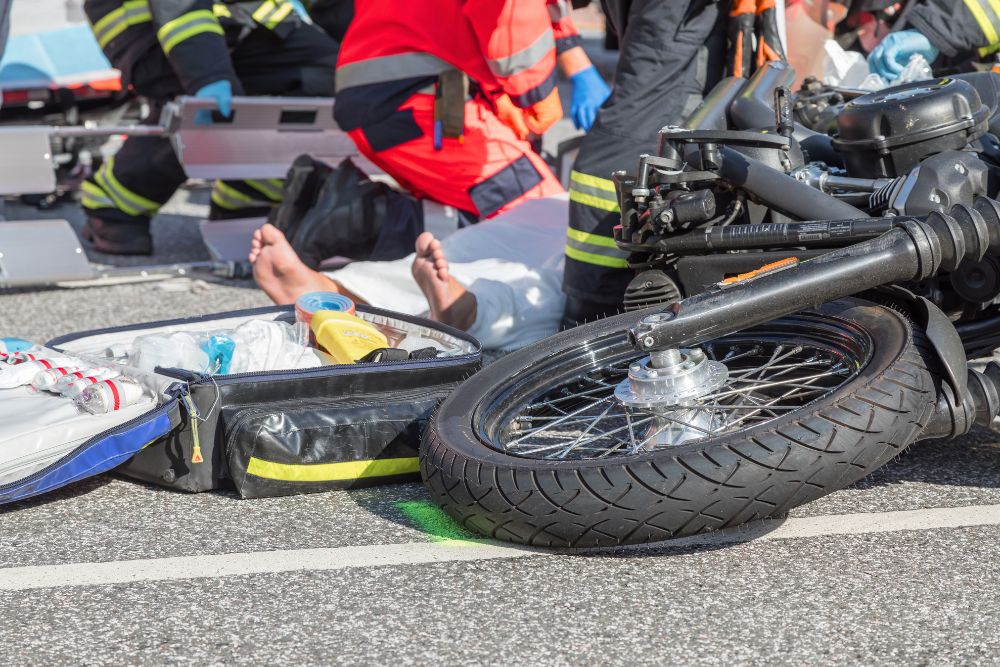
A motorcycle accident lawsuit in Macon usually starts before a lawsuit is ever filed. Most riders first deal with emergency care, insurance, bike damage, and missed work, then decide whether a lawsuit is necessary if the insurer will not offer fair compensation. In Georgia, the key rules include the injury filing deadline, comparative fault, and motorcycle safety laws.
Quick answer: can you sue after a motorcycle accident in Georgia?
Yes. If another driver, company, or party caused the crash, you can file a claim for your injuries and losses, and you may sue if the case does not resolve through insurance. For most injury cases in Georgia, the time limit is generally two years from the date of the accident.
That said, filing suit is not always the first move. In many cases, the stronger path is to gather evidence early, complete treatment, and let the insurance position develop before deciding whether court is necessary. This helps you understand what the case is really worth.
What should you do right after the crash?
Start with safety, call for help, and get medical attention. Georgia law requires immediate notice to law enforcement when a crash involves injury, death, or apparent property damage of $500 or more.
After that, preserve anything that may later support the case. Photos of the scene, damage to the motorcycle, your helmet, road conditions, witness contact information, and your treatment records can all become important if liability is disputed. That is especially true in motorcycle crashes, where insurers often try to shift blame to the rider.
What do you have to prove to sue successfully?
Most motorcycle accident lawsuits are based on negligence. In practical terms, you must show that someone acted carelessly, that the careless act caused the crash, and that you suffered measurable harm as a result.
That harm may include medical bills, lost wages, future treatment, pain and suffering, and bike-related losses. The more clearly those damages are documented, the harder it becomes for an insurer to downplay the claim.
How does fault affect a motorcycle accident case in Georgia?
Georgia follows a modified comparative fault rule. That means your compensation can be reduced by your percentage of fault, and if you are 50% or more at fault, you generally cannot recover damages.
This comes up often in motorcycle cases. Insurance companies may argue that the rider was speeding, changed lanes unsafely, or failed to react in time. Weather and visibility can also become part of the liability dispute, which is why it helps to read how weather-related accidents impact liability in Macon, GA if road conditions may have played a role.
Do Georgia motorcycle laws matter to the lawsuit?
Yes, they can. Georgia requires motorcycle riders and passengers to wear approved protective headgear, and riders also need eye protection unless the motorcycle has a windshield. Georgia also does not allow lane splitting between lanes of traffic.
These rules do not automatically decide who wins, but they may affect how fault is argued. For example, if a defence lawyer claims the rider was lane splitting or not using required safety gear, that may be used to reduce the value of the case or challenge part of the injury claim.
How long do you have to file a lawsuit?
For most motorcycle accident injury claims in Georgia, the deadline is two years. That sounds like a long time, but delays can weaken the case much earlier than that. Witnesses forget details, vehicles get repaired, and video footage may disappear.
That is why many injured riders speak with motorcycle accident lawyers in Macon, GA before they make major decisions with the insurance company. Early case review can help protect evidence and avoid mistakes that are harder to fix later.
When should you talk to a lawyer?
You should consider legal help if your injuries are serious, the insurer is denying fault, multiple vehicles were involved, or the first offer feels too low. A lawyer may also help when there is a dispute over road conditions, visibility, helmet use, or future medical care.
Many riders also want to know what to look for before hiring anyone. If that is where you are in the process, it may help to read how to choose the best personal injury lawyer for your case in Georgia before deciding who to contact.
What damages can you recover?
A motorcycle accident claim may include medical costs, lost income, future treatment, reduced earning ability, pain and suffering, and property damage. Real-world case value can also be affected by available insurance coverage. Georgia’s minimum liability limits remain $25,000 per person, $50,000 per accident, and $25,000 for property damage, which may be far too low in a serious motorcycle crash.
This is one reason lawsuits sometimes become necessary. Even where fault seems clear, the dispute may shift from “who caused it” to “how much is the case actually worth.”
What about the cost of hiring a lawyer?
A lot of injured riders hesitate because they assume legal help will be too expensive. That concern is common, and it is one reason this topic often comes up early in the process. Before moving forward, it may help to understand how much accident lawyers charge in Georgia so you know what questions to ask when comparing firms.
If you are searching for a motorcycle accident attorney in Macon, GA, cost is only one part of the decision. Experience with liability disputes, serious injuries, and insurance tactics usually matters more than a quick promise.
What does the lawsuit process usually look like in Macon?
Most cases follow a familiar path. First comes treatment and investigation. Then the claim is presented to the insurer. If the insurer does not respond fairly, a lawsuit may be filed in civil court. Macon-Bibb State Court says civil case e-filing is mandatory in most civil cases.
After filing, both sides exchange evidence, take depositions, and continue settlement discussions. Many cases still resolve before trial, but a lawsuit creates deadlines and pressure that may move negotiations forward.
Final takeaway
If you need help understanding your options after a crash, Westmoreland Law can review the facts of your case. Contact us today.